Choosing, building and running a court — the kind of detail you won't find anywhere else. Browse the sidebar or search below.
Everything you need to know about site suitability, picking the right court and exactly how ordering works.
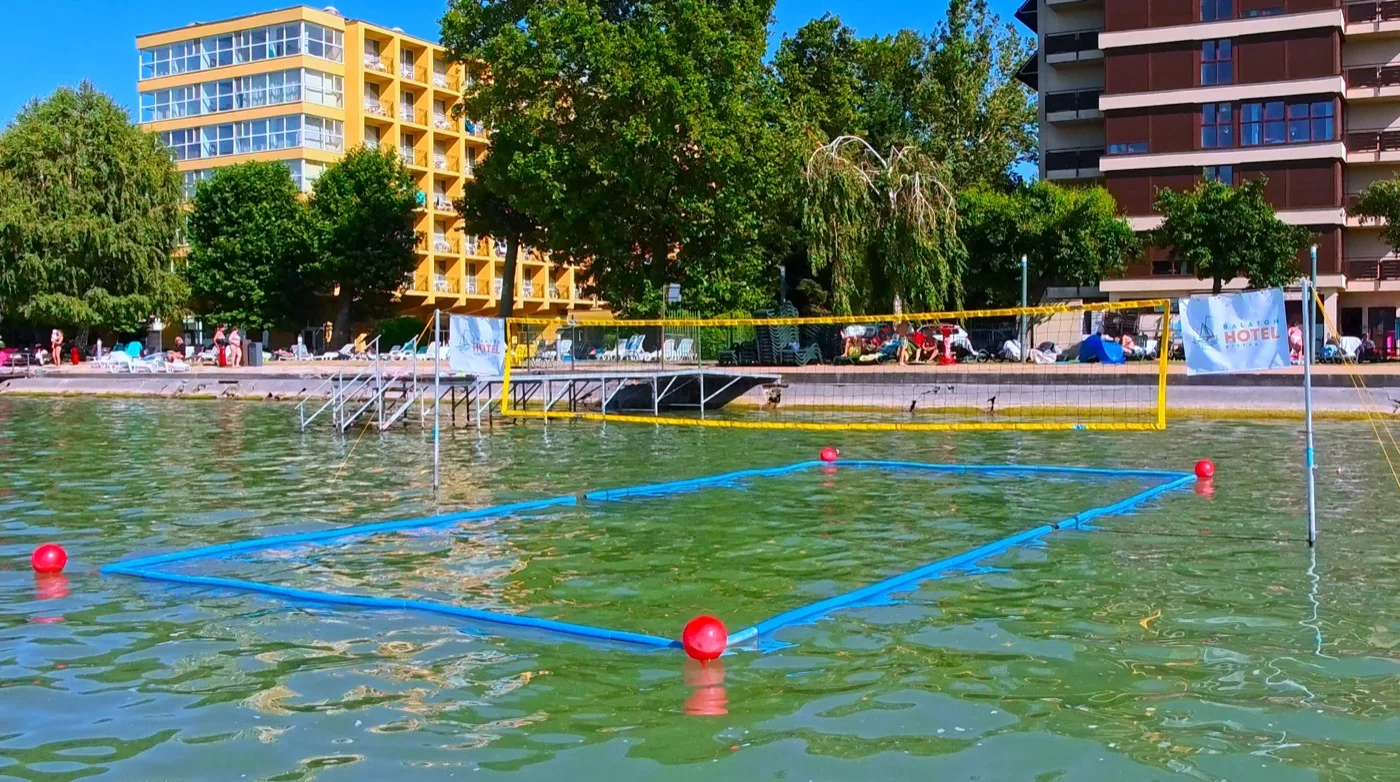
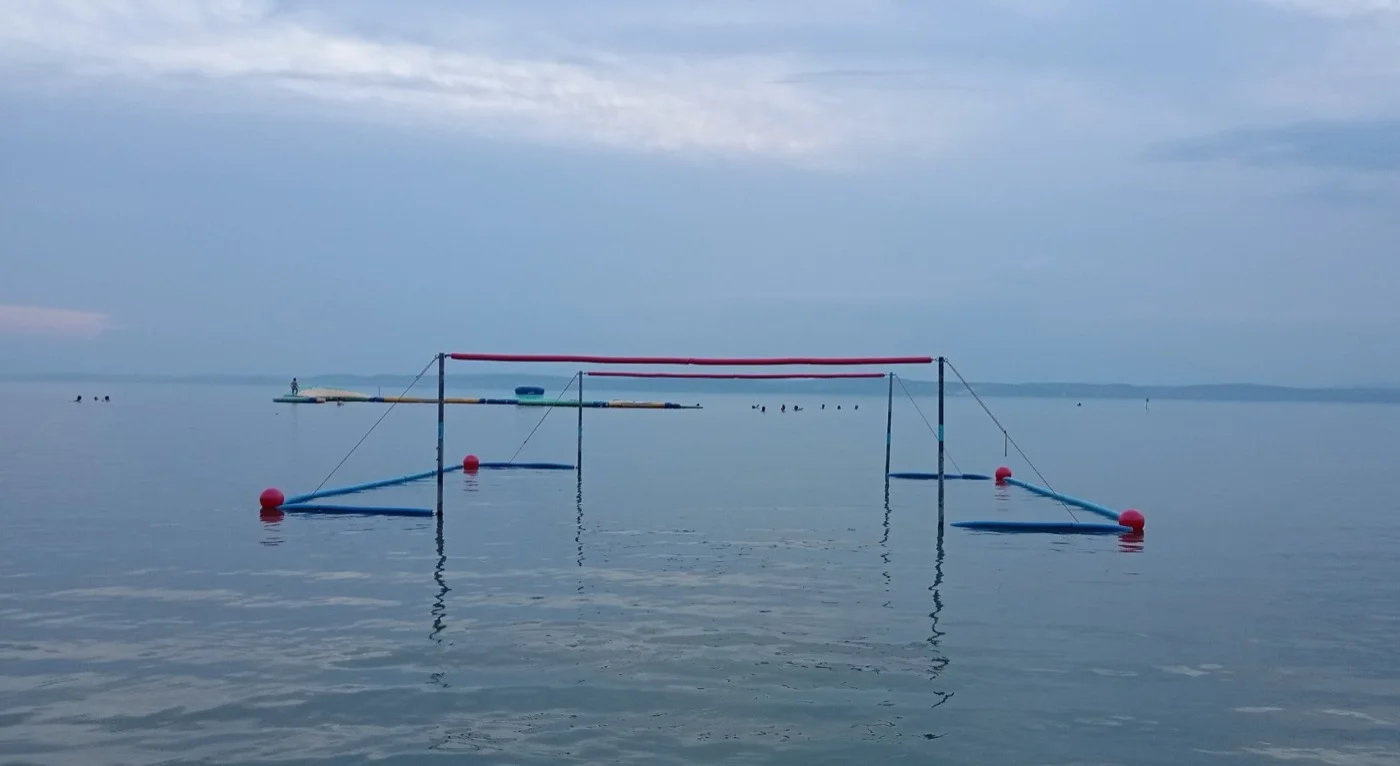
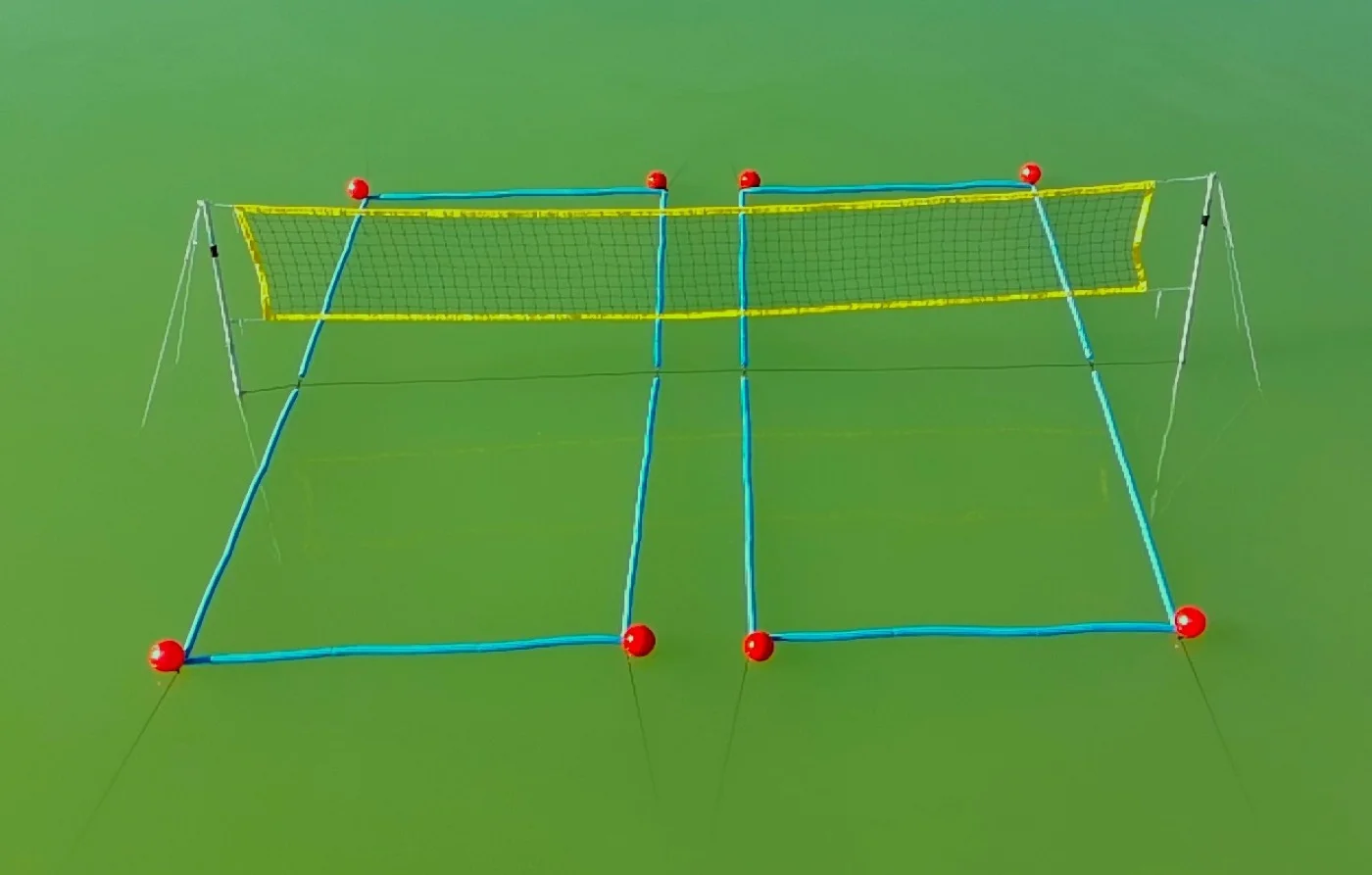
Installing a court takes at least a 10×6 m water surface and a water depth of 0.6–1.3 m .
Installing a court takes at least a 10×6 m water surface and a water depth of 0.6–1.3 m.
In open water, a sandy or fine-gravel bed is ideal. With a muddy or harder bottom it's worth checking that you can walk and move safely in the water, but the court itself can still be installed in those settings.
Before installing, check the local rules on using the waterbed and any permits you may need.
Before installing, check the local rules on using the waterbed and any permits you may need. aQuolley officially counts as a water recreational device.
In Hungary, this type of installation is regulated by the local water authority — check the equivalent body wherever you are.
When you work out the total investment, plan not only for the court itself but also for the initial setup and the minimal, ongoing maintenance costs.
When you work out the total investment, plan not only for the court itself but also for the initial setup and the minimal, ongoing maintenance costs.
Thanks to the modular design, the court breaks down and stores in remarkably little space.
Thanks to the modular design, the court breaks down and stores in remarkably little space. For the off-season winter months it's worth lining up a dry, enclosed storage spot in advance.
Routine maintenance is the owner's responsibility, backed by the high level of professional support we provide.
Routine maintenance is the owner's responsibility, backed by the high level of professional support we provide.
Operation is supported by downloadable online manuals and helpdesk advice available during business hours.
The aQuolley range is built around portable, modular water sports courts that install just as easily in built pools, lakes and on beaches.
The aQuolley range is built around portable, modular water sports courts that install just as easily in built pools, lakes and on beaches.
The Classic gives you an adjustable-size, adjustable-net-height playing area for the most popular ball games — aQuolley, badminton, tennis or futnet.
The Family Court (TwinSplash) is a four-half double practice court with a lower net system, made for the youngest players.
The DualGoal configuration, with lightweight goals and surface boundary lines, turns into the perfect arena for water handball and headball.
Ordering takes just six steps.
Ordering takes just six steps.
Fill in the form on the website, then we'll run through the specifics of your site in a short consultation.
Next you receive a tailored, clear-cut quote.
Payment is handled conveniently and securely by bank transfer or online payment, and the deposit kicks off production.
Once production is done, we arrange precise, fast delivery to the address you give us.
At the end of the process we provide full assistance: where available, our specialists handle the installation, and elsewhere we guide you through setup with detailed online support.
For large resorts, beaches and hotel chains we put together custom packages, of which two standout combinations are the most popular.
For large resorts, beaches and hotel chains we put together custom packages, of which two standout combinations are the most popular.
The Classic & Family Combo pairs a Classic court (for more advanced players) with a Family Court (TwinSplash) for relaxed family fun.
The Arena package includes two DualGoal courts, rounded out by a Classic and a Family court for the complete water experience.
Maintenance, storm protocols, safe use and the warranty.


Ongoing maintenance is the operator's job, but we're with you the whole way through easy-to-reach online manuals and helpdesk support.
Ongoing maintenance is the operator's job, but we're with you the whole way through easy-to-reach online manuals and helpdesk support.
Check the weather forecast daily.
Check the weather forecast daily. It's important to know that no water installation can fully withstand extreme storms — and that holds for aQuolley courts too.
Extreme waves over 1 m can significantly reduce or even eliminate the elasticity of the anchoring system's elastic ropes.
When a storm is forecast, always follow the supplied safety protocol exactly to avoid damage and accidents.
The court's design lets you quickly lift the components most exposed to the elements out of the water.
The court's design lets you quickly lift the components most exposed to the elements out of the water. The underwater anchors don't need to be removed, even during a storm.
The table below is a guide to which component is worth removing in which weather. Always weigh up the actual conditions on site and take the necessary precautions accordingly.
| Event | Lines | Net | Posts | Anchors |
|---|---|---|---|---|
| Calm day | – | – | – | – |
| Calm night | Consider | – | – | – |
| Moderate storm | Recommended | Consider | – | – |
| Strong storm | MANDATORY | Recommended | Consider | – |
| Extreme storm | MANDATORY | MANDATORY | Consider | – |
| Drifting debris | MANDATORY | MANDATORY | MANDATORY | – |
| Season end | MANDATORY | MANDATORY | MANDATORY | Recommended |
Key
Terms
The court breaks down module by module in just a few minutes.
The court breaks down module by module in just a few minutes.
Removing the line module
Time needed: ~5 minutes per direction.
Removing the net module
Time needed: ~5 minutes per direction.
Removing posts and ground screws
Time needed: ~1 minute per post.
Reinstallation
Time needed: ~5 minutes per post (in favourable weather).
At regular intervals, ideally once a week, inspect the condition of the line module, the ropes and the court lines, as well as the corner-buoy anchor ropes.
At regular intervals, ideally once a week, inspect the condition of the line module, the ropes and the court lines, as well as the corner-buoy anchor ropes.
Check the net module just as often, paying particular attention to the proper tension of the tensioning ropes and to the net body being free of damage.
The structural integrity of the support posts and the anchoring elements only needs checking at the start and end of the season.
Supervising operation means continuously watching over the court's integrity and the players' safety.
Supervising operation means continuously watching over the court's integrity and the players' safety.
Safety checks
Keep the court intact and make sure the rules are followed. Supervision consists of regularly checking the components and settings, and of coordinating players safely.
On-site intervention
Respond to any issues that arise, or to camera feedback, with your physical presence. Intervention is only needed when guests break the rules of use, damage the equipment, or endanger the equipment or the players.
It counts as misuse when under-14s play on the court without supervision, when guests ignore the warnings about the underwater anchors or staff instructions, or when the net height and court size are altered beyond the permitted values.
It counts as misuse when under-14s play on the court without supervision, when guests ignore the warnings about the underwater anchors or staff instructions, or when the net height and court size are altered beyond the permitted values.
Using balls over 300 grams and attaching foreign objects to the structure count as vandalism.
Damaging the net, the tensioning and bracing ropes or the court lines is considered severe damage and is strictly prohibited, as is letting kayaks, boats and SUPs pass through or moor on the playing area.
Solid backup against disputes.
Solid backup against disputes.
The price and scope of our warranty packages depend on the availability of on-site and remote supervision.
With the remote access provided to your camera system, you can check in black and white at any time exactly when and how a given component was damaged.
Ask our customer service for the details.
Everything about the court's structure, the technical specs and the exact packaging dimensions.
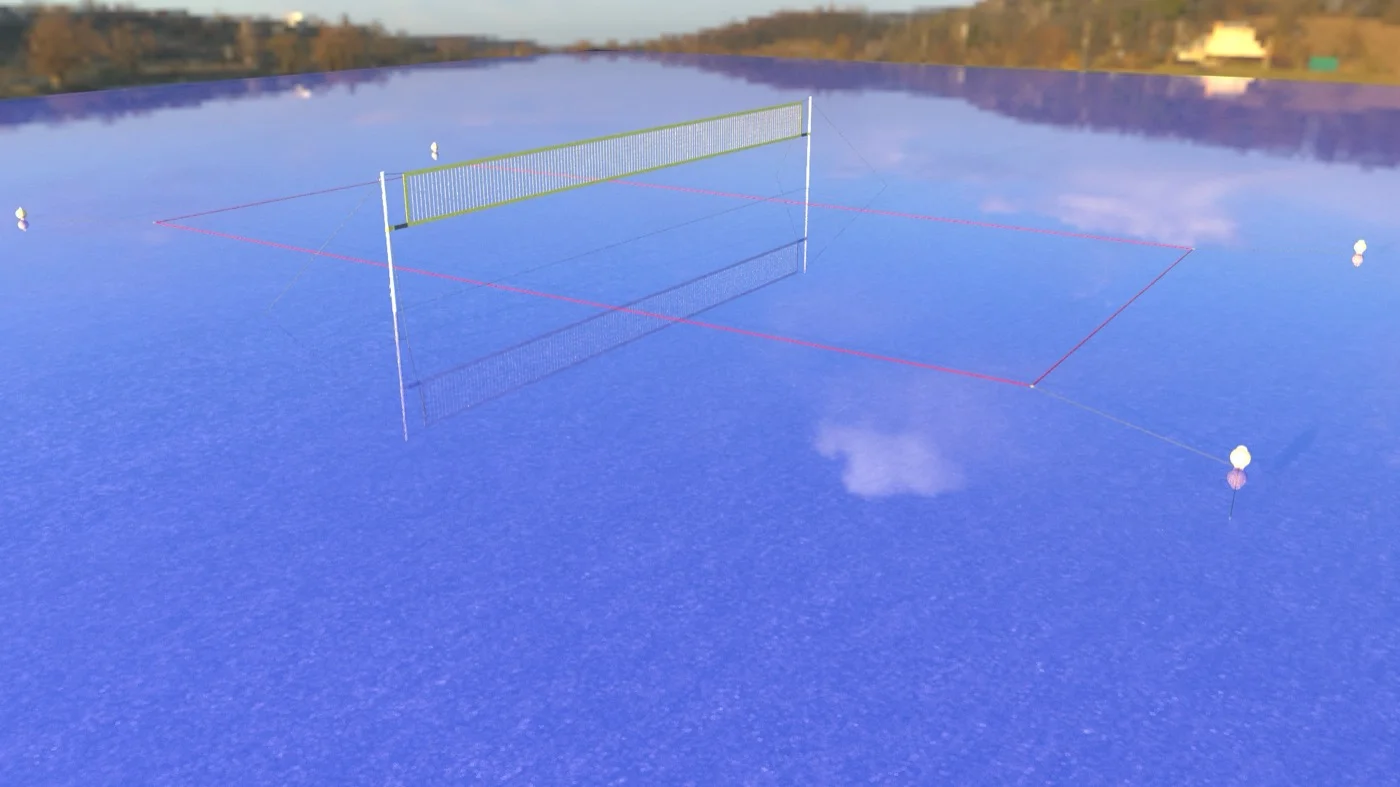
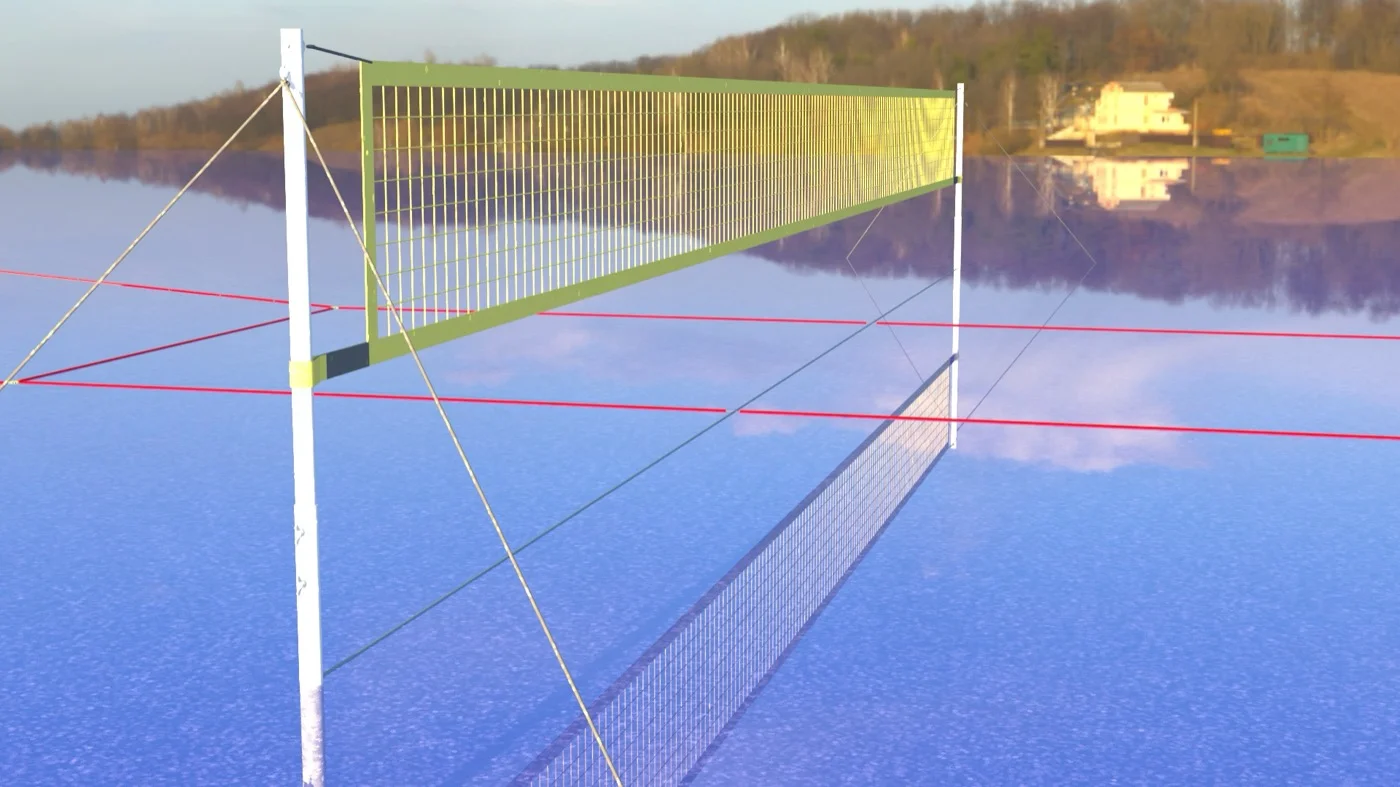
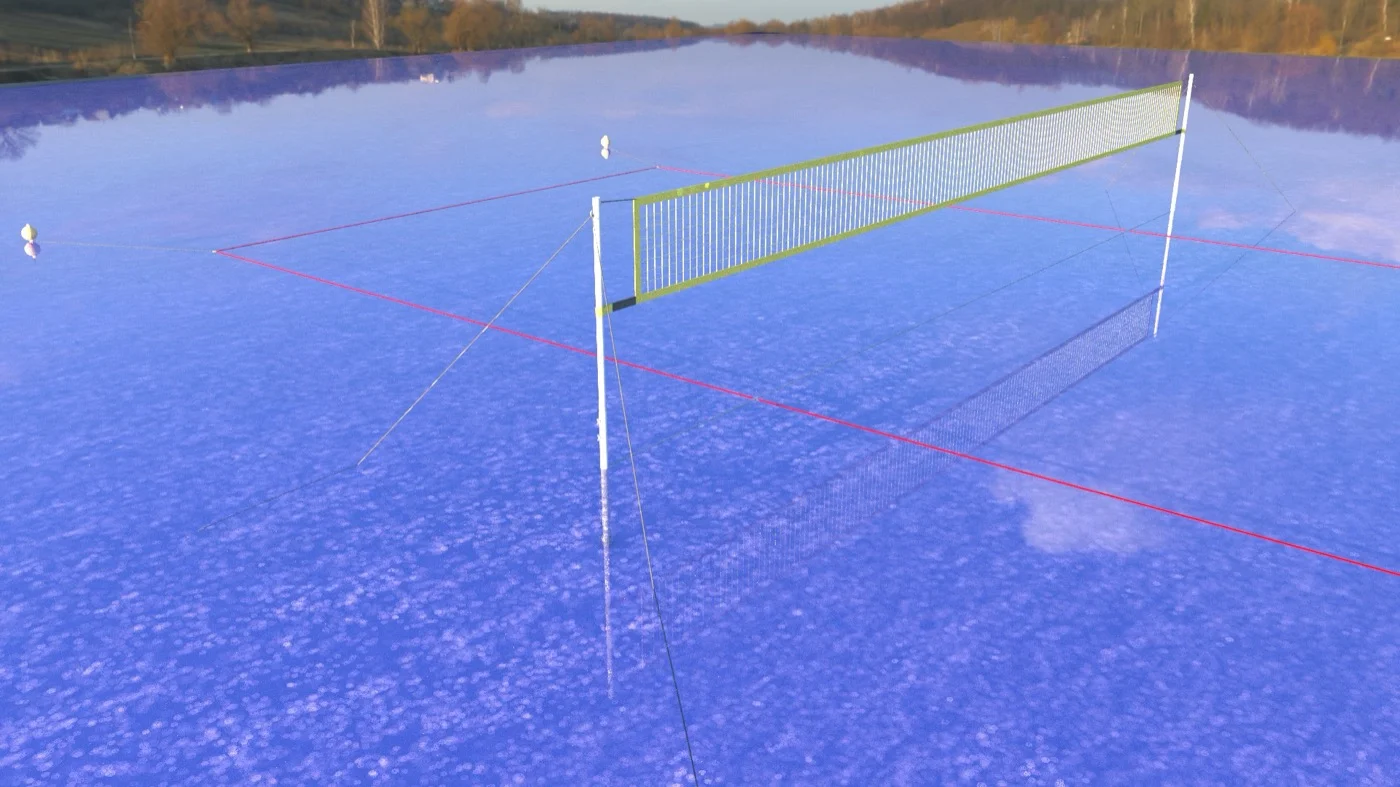
aQuolley is a modular water sports court built from robust, premium components.
aQuolley is a modular water sports court built from robust, premium components.
Every court type is based on a stable support structure that anchors to the waterbed or pool floor, or to the pool's immediate surroundings. This frame holds the net and line modules. The modules themselves are built from smaller units, the so-called components.
Thanks to this design, repairing or replacing damaged or worn elements can be done quickly, with minimal cost and time.
A heavy-duty, stable anchoring system for both open-water and pool environments.
A heavy-duty, stable anchoring system for both open-water and pool environments.
The two support posts anchored to the waterbed or to external points, their two bracing ropes each, and the net module strung between them together form a closed, seven-element frame. As long as the connections and fixing mechanisms between these elements are intact, the structure stays maximally resistant to external physical forces.
The net's height and width can be freely adjusted at any time, without ever putting the structure's stability at risk.
A quickly reconfigurable playing area and a fixing that releases in seconds.
A quickly reconfigurable playing area and a fixing that releases in seconds.
The two court lines mark out the court with highly visible cylindrical elements that float on the water surface.
The lines connect with carabiners to the anchor buoys placed at the corners, and at the net to the centre line strung between the two posts. This semi-automatic solution is what makes the whole system extremely fast to remove or put back.
The exact boundaries of the playing area are set by the corner clips threaded onto the court lines, and resizing is done by simply repositioning these, without tools.
Maximum versatility: several sports on a single flexible court.
Maximum versatility: several sports on a single flexible court.
The line system's design lets you regulate the size of the court halves with pinpoint accuracy in half-metre steps.
Thanks to the telescopic build of the net-support posts, the net height is adjustable to the millimetre.
Since all three of the court's dimensions are configurable across a wide range, the system adapts in moments to the specific rules of the various water ball games and team sports.
aQuolley courts are equally suited to placement in open water or in built pools.
aQuolley courts are equally suited to placement in open water or in built pools.
In a pool environment, the elements of the special fixing kit guarantee maximum stability and durability — in these cases, extremely careful size and configuration calculations must be carried out before production.
The basic requirement for safe and comfortable use is at least a 10×6 m clear water surface and a shallow water depth of 0.6 to 1.3 m.
In open water, a sandy or fine-gravel bed is ideal. Although the court can also be installed on a muddy or hard bottom with special, custom fixing elements, in such cases it's worth making sure in advance that players have an unobstructed and safe space to move.
Easy transport and fast configuration changes.
Easy transport and fast configuration changes.
The modular design makes the court simple and convenient to carry.
Every unit can be removed individually, which radically simplifies transport, any relocation, or protecting it against the elements.
Thanks to the lightweight but highly resistant materials, even a single person can carry out the full installation, the teardown, or the configuration changes needed to switch between sports.
A flexible structure and fast reaction time, even in the fiercest storms.
A flexible structure and fast reaction time, even in the fiercest storms.
We designed aQuolley courts to withstand moderate weather. The flexible build of the line system lets wind and choppy water pass through the playing area with minimal resistance, while the robust support structure firmly preserves the court's integrity, holding the net and lines steady even in significant waves.
To handle various weather anomalies, a detailed storm protocol is available, recommending the full or partial removal and securing of individual modules depending on the severity of the situation. The quick-release elements allow for immediate action, guaranteeing the long-term lifespan of the whole system.
Compact packaging for easy storage and fast checking.
Compact packaging for easy storage and fast checking.
The court's elements arrive on site in two easy-to-handle units. Package "A" (1520×120×60 mm) holds the support posts, while box "B" (1100×550×250 mm) contains the other components — the total shipment weighs around 12.5 kg.
For maximum safety, every sealed unit includes an itemized contents list and an overview photo, so on arrival you can verify in moments that the packages are complete.
The 2-half competition courts ( aQuolley Classic ), with adjustable-size halves and net height, host various ball-based team games on shallow-water beaches.
The 2-half competition courts (aQuolley Classic), with adjustable-size halves and net height, host various ball-based team games on shallow-water beaches.
The Family courts (aQuolley TwinSplash) are smaller, four-half double practice courts, designed specifically so that families with small children can fully enjoy volleyball, beach tennis or badminton in the water.
The DualGoal courts (aQuolley DualGoal) are arenas designed specifically for water handball and headball, where the top crossbar can double as a volleyball net when needed.
Our products are made in our own workshop and in collaboration with respected Hungarian manufacturing partners.
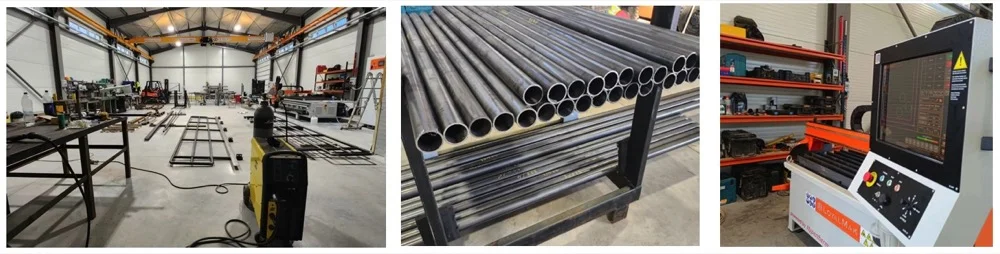
Precision manufacturing and premium material quality for lasting corrosion protection.
The support posts, fixing elements, connectors, base plates and reinforcements get professional surface treatment and precision machining for a perfect fit.
The components are made as standard from anodized aluminium or galvanized steel, but for pool or marine use — for a surcharge — they can also be ordered in stainless steel or special marine aluminium.
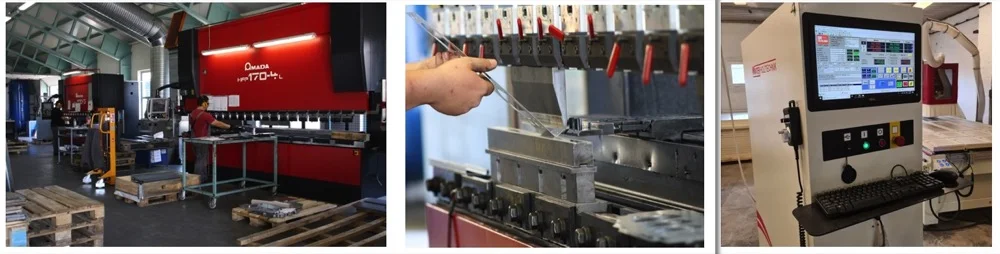
Custom-made components and professional anchoring technology.
The base plates for the pool fixings are made to fully custom specifications, directly at our request.
The ground and soil screws and anchors are standard parts that our specialists modify individually to fit the special water conditions perfectly.
The carabiners, fixing screws and hooks are high-quality standard components whose material structure makes them fully suited to durable underwater use.
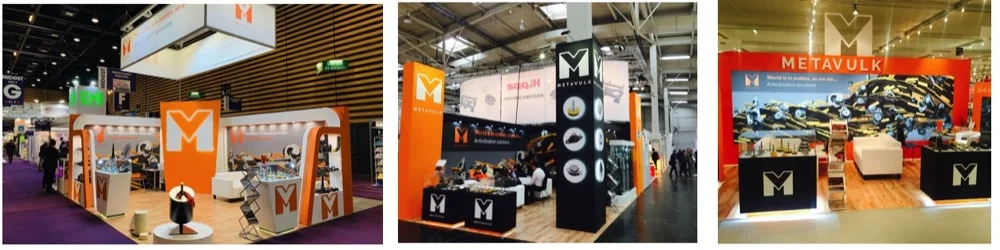
We developed the post-stabilisation solutions designed for pool environments together with one of Hungary's leading manufacturers, also drawing on the shock absorbers they supply.
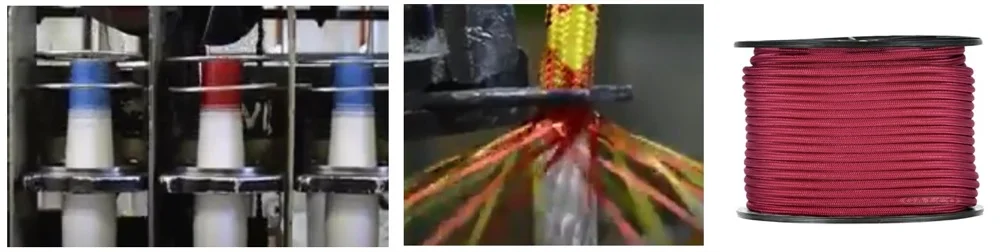
The first-class fixed and elastic ropes used for the court, developed specifically for water use, are made by Hungary's leading manufacturer with the custom additives we specify.
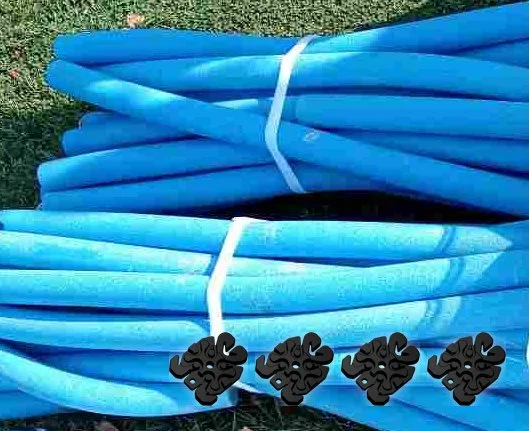
The cylindrical LDPE line bodies and the corner clips are custom-developed components made exclusively at our order, to our own specifications.
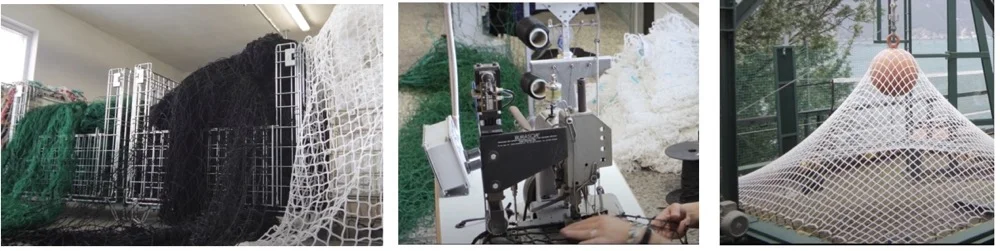
The net module included in the package resists constant UV radiation, chlorine and salt water. The industrial PVC edging protects the structure from mechanical damage, while the special, waterproof support ropes ensure the net keeps its optimal tension over the long term.
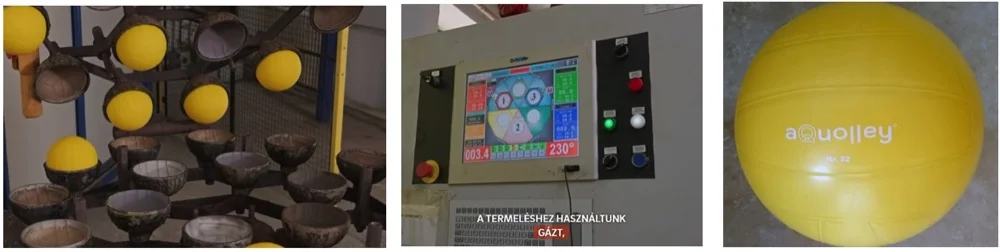
The premium, phthalate-free PVC balls included in the package are made to our own design. Optimised specifically for water play, with a 260 mm diameter and a weight of 280 g, they guarantee a professional playing experience while protecting the integrity of the net and line modules.
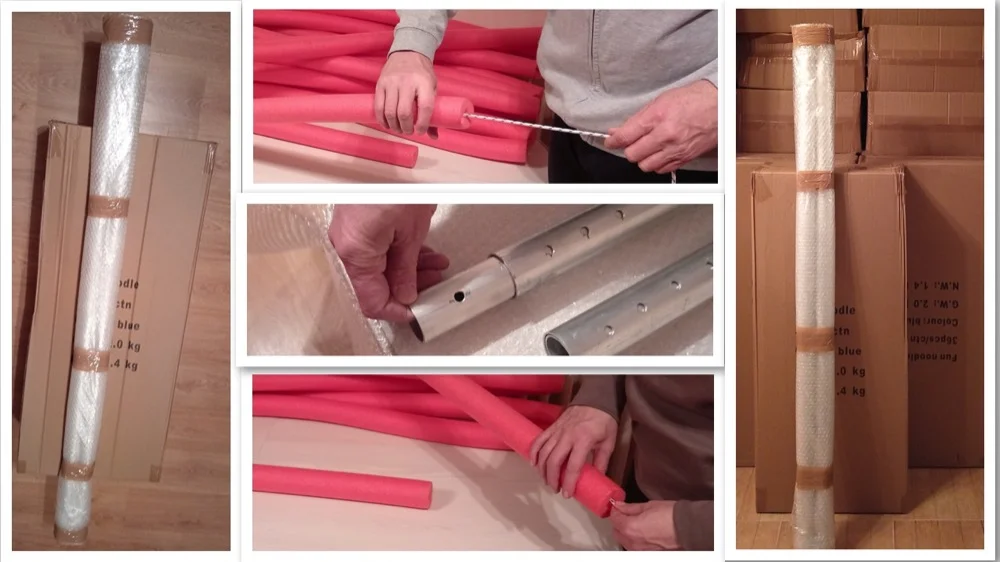
Components ready for immediate installation, in complete factory packaging.
Our specialists carry out the precision pre-assembly and build of the line system back at the factory. At the very end of the process, our colleagues carefully check every single part and component, count them item by item, and pack them professionally; then, once the accompanying documents are issued, the finished packages are handed over to our logistics partner.
Az oldalon belüli lejátszás http-ről működik — most file://-ből nyitottad meg.
Indítsd a helyi szerverről: http://localhost:8765/ (az éles oldalon, https-en automatikusan megy).